On-Site Crushing for Remote Projects
Processing aggregate where it is neededRemote renewable energy, road construction and mining projects often share a challenge: getting the right aggregate to site efficiently. Where commercial aggregate sources are limited or a long way from the project, transporting large volumes of material quickly becomes a major cost and logistical consideration.
The challenge is not only the cost of the aggregate, but everything involved in getting it to site: long haul distances, more truck movements, higher fuel consumption, greater demand on access roads and the coordination needed to keep supply consistent. Mobile crushing and screening offers an alternative by processing suitable raw material available at or adjacent to the project, where it is needed.
Reducing transport requirements
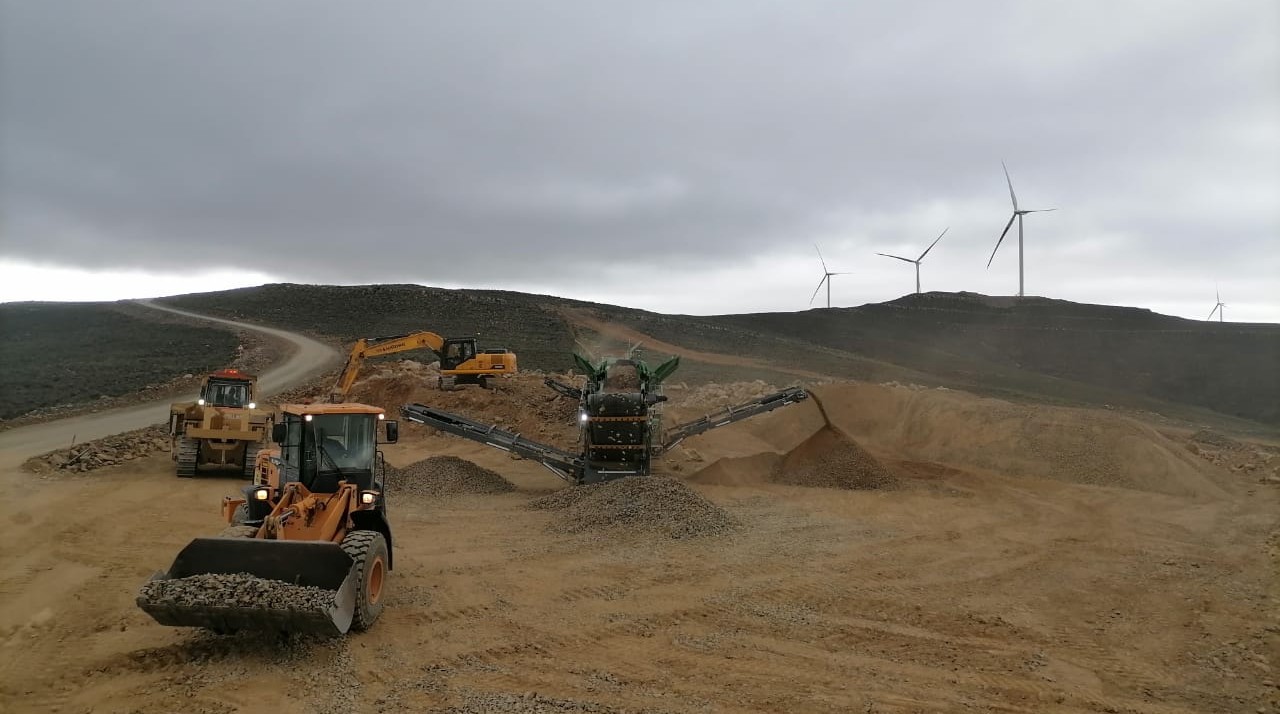
For a remote project, the distance between a commercial quarry and the site has a significant effect on the supply chain. Every tonne of aggregate hauled to site means additional truck movements, fuel and road access. Where suitable raw material is available on or adjacent to site, Eco-Match can establish a mobile crushing and screening operation closer to the point of use. That can reduce the volume of finished aggregate needing long-distance haulage, simplify supply and reduce reliance on continuous deliveries from an external source.
Less wear and tear on roads
Remote projects often depend on long stretches of public roads, gravel access roads or temporary site roads. High volumes of heavy vehicle movements contribute to road wear and increase maintenance. Reducing the distance aggregate travels also reduces the number of heavy vehicle movements tied to supply, which helps limit the impact of haulage on the surrounding road network, particularly where large volumes are needed over extended periods.
Reducing transport-related emissions
Fuel consumption is another consideration when large quantities are moved over long distances. By reducing the distance finished material travels, on-site processing can also reduce the fuel and transport-related emissions associated with supply. It does not eliminate transport, but it can cut unnecessary movement between a commercial source, a processing facility and the site.
When commercial sources are not close by
One of the biggest advantages of mobile crushing is in areas where established commercial sources are limited or some distance away. This is particularly relevant to remote road and renewable energy developments built far from established towns and quarrying operations. Where suitable rock or other raw material is available within or close to the project, it may be possible to process it on site, subject to the required technical assessment and project specifications. That gives project teams another option when conventional supply would involve significant haulage or complex logistics.
Haul-in versus on-site at a glance
| Consideration | Hauling in finished aggregate | On-site mobile crushing and screening |
|---|---|---|
| Truck movements | High, continuous deliveries | Reduced where raw material is on or near site |
| Road wear | Greater on access and public roads | Lower haulage impact |
| Transport emissions | Higher over long distances | Reduced haul distances |
| Supply chain | Source, haul, process, purchase, haul back | Processing brought closer to the point of use |
| Best suited to | Sites near established commercial sources | Remote sites with suitable raw material |
Supporting project cost and efficiency
On-site processing reduces the number of stages between source and final application. Instead of sourcing material, transporting it to a commercial facility, purchasing finished aggregate and hauling it back, mobile crushing and screening brings the processing capability closer to the project. Reducing these transport and handling steps has the potential to lower overall project costs and improve supply efficiency. The actual benefit depends on the available raw material, production volumes, haul distances and project requirements.
Particularly relevant to renewable energy projects
These considerations are especially relevant to remote renewable energy developments, including wind and solar. Roads, turbine platforms, hardstands, foundations and other supporting infrastructure need significant quantities of aggregate, while sites are often some distance from established commercial sources. Eco-Match has met these challenges on renewable energy projects across Southern Africa, establishing processing at the project where suitable raw material is available and producing aggregate to the project’s specifications. See our recent projects or our crushing and screening services.
Frequently asked questions
What is on-site (mobile) crushing and screening?
Processing suitable raw material available at or adjacent to a project into the aggregate the project needs, rather than transporting finished aggregate in over long distances.
When does on-site crushing make sense for a remote project?
Where commercial aggregate sources are limited or far away and suitable raw material is available on or near site, subject to the required technical assessment and project specifications.
Does on-site crushing reduce project costs?
It can. It removes stages from the supply chain and reduces long-distance haulage. The actual benefit depends on the available raw material, production volumes, haul distances and project requirements.
How does on-site crushing reduce road wear and emissions?
By cutting the distance finished aggregate travels, it reduces heavy vehicle movements and the fuel consumption and transport-related emissions associated with supply.
Is on-site crushing suitable for renewable energy projects?
Yes. Wind and solar developments need aggregate for roads, platforms, hardstands and foundations and are often far from commercial sources. Eco-Match has produced aggregate on renewable energy projects across Southern Africa.