
Understanding the Grading Envelope
Aggregate Grading and Choosing The Right Crushing and Screening TrainFor many construction and road-building applications, aggregate grading is just as important as maximum particle size. The way different particle sizes are distributed throughout a product can influence how the material performs, how it compacts and whether it falls within the required specification.
For crushing and screening subcontractors, this means that producing the right product is not simply a matter of reducing material to a particular size. The entire processing train needs to be considered around the required final product.
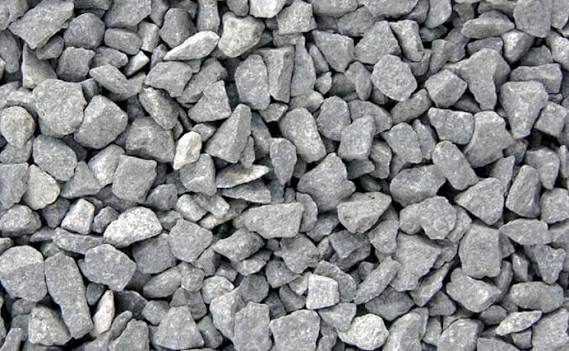
Size is only one part of the equation
Consider a project requiring a graded aggregate with a maximum particle size of 37.5 mm. A crushing circuit may successfully produce material where no particles exceed 37.5 mm. However, that material could still contain too much of one particular fraction and too little of another.
In other words, being below the maximum size does not automatically mean that the material has the correct grading. A graded aggregate is made up of particles across a range of sizes. The proportion of material retained at different sieve sizes determines its overall particle-size distribution. This distribution is important because the aggregate needs to behave as intended within its application.
For example, a road layer generally requires a controlled combination of coarse, intermediate and fine particles. If the grading is outside the required range, the material may not perform in the same way as a correctly graded product, even if its largest particles are within the specified limit.
What is aggregate grading?
Aggregate grading refers to the distribution of particle sizes within a particular material. When aggregate is tested, it is typically passed through a series of sieves with progressively smaller openings. The amount of material retained on each sieve provides an indication of how much of each particle size is present.
The resulting particle-size distribution can then be compared with the grading requirements for the intended product. This is particularly relevant for products such as G5, G6 and G7 materials, where the required grading forms part of the product specification.
The objective isn’t simply to make smaller rock. It is to produce a controlled combination of particle sizes that falls within the applicable requirements.
Understanding the grading envelope
A useful way to think about grading is through the concept of a grading envelope. A grading envelope defines the acceptable range of particle-size distribution for a particular material. Rather than specifying a single particle size, it establishes upper and lower limits across a series of sieve sizes.
The actual material produced can then be compared against those limits. If the grading falls within the envelope, the particle-size distribution is within the specified range. If it falls outside the envelope at one or more sieve sizes, the material may not meet the required grading. This is why two materials can both have the same maximum particle size while having very different grading characteristics.
Understanding the grading envelope therefore helps determine how the crushing and screening circuit needs to be configured.
The crushing circuit influences the final grading
The final grading of a product isn’t determined by the screen alone. It is influenced by the complete processing circuit, beginning with the material being fed into the plant.
The type and size of crusher, the reduction ratio, the use of a scalping screen, screen configuration, aperture sizes, recirculation and the characteristics of the feed material can all influence the resulting particle-size distribution. This is why equipment selection should start with the required final products, rather than simply selecting a crusher based on its capacity.
A specification-led approach to crushing and screening
Effective aggregate production starts with understanding what the project actually needs. The required products, grading envelopes, top sizes and production volumes should inform the configuration of the crushing and screening train. The available feed material and site conditions then need to be considered to determine how that circuit can operate effectively.
At Eco-Match, our approach to mobile crushing and screening is centred around the requirements of the project and the products that need to be produced. The objective is to configure and operate a crushing and screening solution capable of producing the required aggregate fractions at the volumes needed by the project.
Frequently asked questions
Is aggregate that is below the specified maximum size automatically compliant?
No. Meeting the maximum particle size does not necessarily mean the aggregate meets the required grading. The overall particle-size distribution must fall within the applicable grading envelope or specification.
How does crushing and screening affect aggregate grading?
The crushing and screening circuit influences the size distribution of the final product. Crusher configuration, screen apertures, recirculation, feed material and operating conditions can all affect the resulting grading.
Can Eco-Match produce aggregate to a specific grading requirement?
Eco-Match can configure its crushing and screening trains around the required product size and applicable grading envelope. However, the final material properties depend on the characteristics of the source material and laboratory testing may be required to confirm compliance with all project-specific requirements.