The Reality of Outlying Projects
What to do when there is no aggregate source nearbyLarge construction and infrastructure projects can require significant quantities of aggregate. Roads, renewable energy developments, mining infrastructure and other major projects may require everything from road-building materials and base course to concrete stone, drainage material and other aggregates.
But what happens when the project is located far from an established commercial quarry or when a suitable aggregate source isn’t available nearby?
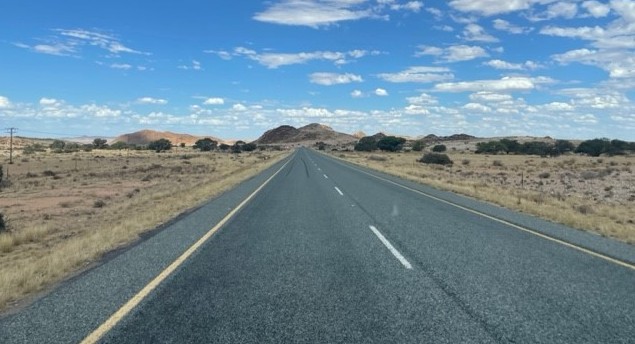
For projects requiring tens or hundreds of thousands of tonnes of material, the distance between the source of the aggregate and the project site can become a significant consideration. Transporting large quantities of material over long distances adds truck movements, fuel consumption, road wear, handling requirements and cost.
In these circumstances, on-site crushing and screening can provide an alternative approach: rather than transporting aggregate to the project, the project can potentially process suitable material available on or near site.
The challenge of sourcing aggregate remotely
Commercial quarries provide an established source of construction aggregate, but they are not necessarily located close to every project. This is particularly relevant for projects in remote areas, including renewable energy developments, mining operations and large infrastructure projects.
A project may have suitable rock available on site or within the project area, while the nearest commercial source of the required aggregate could be a significant distance away. The challenge then becomes a logistical one. If a project requires a large volume of aggregate, every additional kilometre between the source and the project can increase the amount of time, equipment and resources required to move that material. There may also be practical limitations. Local road infrastructure may not have been designed for continuous heavy vehicle movements, while site access can be restricted or affected by terrain, weather and other construction activities.
Bringing the processing to the material
Mobile crushing and screening provides a different approach to aggregate supply. Instead of extracting, processing and transporting finished aggregate from a distant commercial source, suitable rock available within the project area can potentially be processed closer to where it will ultimately be used.
The concept is straightforward:
Source material → crushing → screening → finished aggregate
Rather than moving large quantities of finished aggregate over long distances, the processing operation is brought closer to the material source and the point of use.
Is there suitable material available?
The first consideration is the material itself. The presence of rock on a project site does not automatically mean it is suitable for every aggregate application.
The characteristics of the source material need to be understood, including factors such as:
- Rock type
- Hardness
- Abrasiveness
- Natural particle size
- Feed size
- Moisture and fines content
- Expected production volumes
- Required final products
The required end product also needs to be established. A project may require G5, G6 or G7 materials, concrete stone, road stone, ballast, rip rap or other aggregate products. Each application can have different requirements for particle size, grading and material properties.
Reducing the movement of material
One of the potential advantages of on-site processing is the opportunity to reduce the distance that finished aggregate needs to travel. If aggregate is produced closer to where it will ultimately be used, the project may be able to reduce some of the truck movements associated with importing material from a distant commercial source.
This can reduce the amount of material handling required between source and application and may also reduce pressure on access roads and surrounding road networks. For large projects, where aggregate volumes can be substantial, these logistical considerations can become an important part of overall project planning.
The objective isn’t necessarily to eliminate all haulage. Material will still need to be moved around the project site. The opportunity is to shorten the overall supply chain by producing suitable material closer to its point of use.
Bringing the solution closer to the project
For major projects, aggregate supply is a logistical consideration as much as a production consideration. Where suitable rock is available but commercial aggregate sources are remote, mobile crushing and screening can provide an alternative by bringing the processing capability closer to the project.
The starting point, however, should always be the project itself: what material is available, what products are required, how much is needed, and where will it ultimately be used?
Once these factors are understood, the feasibility of on-site processing can be assessed as part of the wider project strategy.
For remote road, mining and renewable energy developments in particular, producing suitable aggregate closer to where it is required can help simplify the material supply chain and reduce unnecessary movement of finished material.
Frequently asked questions
Can any rock found on a project site be crushed into aggregate?
Not necessarily. The suitability of the source material depends on its physical and material characteristics, as well as the requirements of the final product. Factors such as rock type, hardness, abrasiveness, feed size and fines content need to be assessed before determining whether the material is suitable for processing.
Does on-site crushing eliminate the need for haulage?
No. The lowest rate can carry a higher overall cost if downtime, inconsistent production or the wrong configuration slow the wider project. Overall cost and reliability matter more than the headline rate.
What information is needed to assess an on-site crushing project?
A Important information includes the available feed material, expected feed size, required final products, applicable grading or project specifications, total and monthly tonnages, project duration and site location. Understanding these requirements allows the crushing and screening solution to be assessed around the actual project needs.